Yellow leaves
Yellow Leaves: The Decision Tree (Light, Water, Nutrients, Pests)
Yellow leaves are your plant’s early “check engine” light. The good news is that yellowing usually follows clear patterns. So, instead of guessing, use this simple decision tree to spot the cause fast, then apply the right fix with confidence.
Start Here: The 60-Second Triage
Before you do anything, answer these four questions:
1. Where are the yellow leaves?
– Older / lower leaves first
– New / top growth first
– All over (many leaves at once)
2. How does the leaf feel?
– Soft + limp (often water/roots)
– Crispy edges (often light/underwatering/salt buildup)
3. What’s the soil doing?
– Stays wet for many days
– Dries very fast (1–2 days)
Any pests or residue?
– Fine webbing, tiny dots, sticky shine, or silvery streaks
Now follow the decision tree below.
Recommended products:

I personally select and recommend every product you see on this page because I believe it truly helps you grow healthier, happier indoor plants, also for convenience and fast shipping, we link to products available on Amazon.
As an Amazon Associate, we earn a small commission from qualifying purchases at no extra cost to you. Every purchase you make helps support our mission to share knowledge, inspire greener homes, and keep the Indoor Plant Care community growing. 🌱
-
 $15.99Buy Now
Soil moisture meter
(to confirm overwatering vs underwatering)
06/08/2026 05:03 am GMT -
 $47.99Buy Now
Coarse horticultural perlite
(to fix soggy soil + improve drainage)
06/08/2026 05:03 am GMT -
 $7.99Buy Now
Yellow sticky traps
(to catch fungus gnats + confirm wet-soil conditions)
06/08/2026 05:03 am GMT -
 $15.49Buy Now
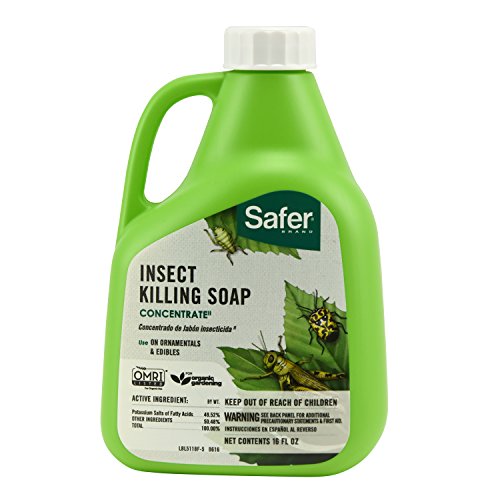
Insecticidal soap
(gentle option for mites/thrips/soft-bodied pests)
06/08/2026 06:03 am GMT -
 $24.77Buy Now
Grow light
(to solve low light that triggers yellowing + slow drying)
06/08/2026 06:04 am GMT
The Yellow Leaves Decision Tree
Step 1: Is the soil staying wet for too long?
If YES → go to Water (Overwatering / Root Stress)
If NO → go to Step 2
A quick test: lift the pot. If it still feels heavy and cool several days after watering, it’s staying wet too long.
Step 2: Is the plant in low light or struggling through winter light?
If YES → go to Light (Too Little Light)
If NO → go to Step 3
Low light slows water use. As a result, soil stays wet longer, and leaves yellow more easily.
Step 3: Are the yellow leaves showing a “pattern” (veins stay green)?
If YES → go to Nutrients (Chlorosis / Deficiency)
If NO → go to Step 4
Look closely: if the leaf is yellow but the veins remain green, nutrients are often involved.
Step 4: Do you see pests or pest damage?
If YES → go to Pests
If NO → check the “Other common causes” section
Water: Overwatering, Root Stress, and Early Root Rot
Overwatering is the #1 reason indoor plants develop yellow leaves—especially when light is low.
Overwatered plant signs
- Soil stays damp 4–7+ days after watering
- Pot feels heavy, soil smells musty
- Leaves turn yellow and feel soft or droopy
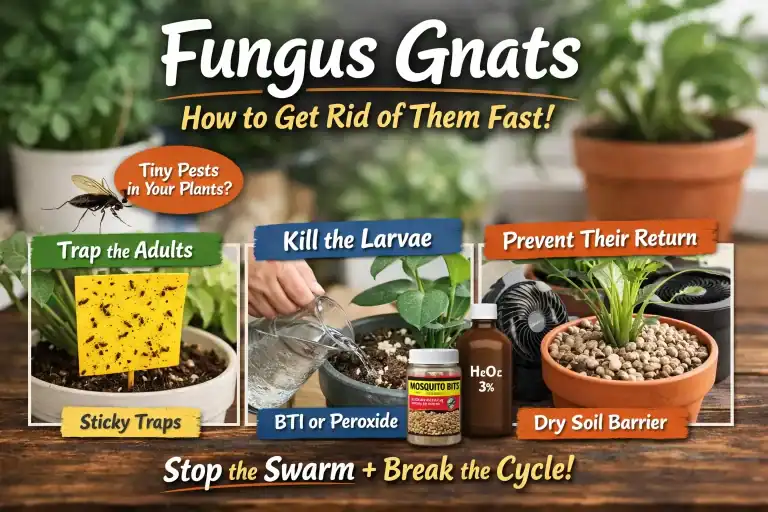
- Fungus gnats appear (a clue the top stays moist)
What to do (in order)
- Pause watering until the top 2–5 cm (1–2 inches) dries (more for larger pots).
- Increase light and airflow (even a small change helps).
- Empty saucers so roots don’t sit in water.
- Check drainage: make sure water can escape freely.
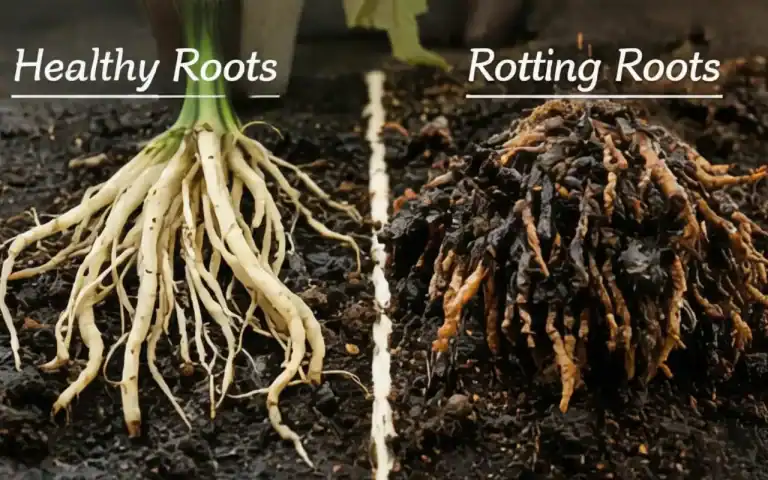
- If it’s severe, inspect roots:
- Healthy roots = firm and light-colored
- Rotting roots = brown/black, mushy, or smelly
If you find rot, trim damaged roots, repot into fresh mix, and water lightly.
Next, wait: new growth should improve first. Older yellow leaves rarely turn green again, so watch for healthier new leaves.
Light: Too Little Light vs Too Much Sun
Light problems often look like “random” yellowing—until you match them to the window.
Too little light (common)
- Slow growth, long stems, smaller leaves
- Soil stays wet longer
- Yellowing begins gradually, often on lower leaves
Fix
- Move the plant closer to a bright window (still indirect light for most plants).
- Rotate the pot weekly so growth stays balanced.
- In winter, consider a simple grow light for consistency.
Too much direct sun (also common)
- Yellow patches that look bleached, then turn crispy
- Damage is strongest on the side facing the window
Fix
- Pull the plant back from harsh sun or add a sheer curtain.
- Therefore, the plant keeps brightness without the burn.
Nutrients: When Yellow Leaves Are “Food Signals”
If water and light look reasonable, nutrients are the next likely cause—especially if the plant hasn’t been fed for months.
Common nutrient patterns
- Overall pale yellow + slow growth → often nitrogen
- Yellow between veins (veins stay green) → often iron or magnesium
- Leaf tips brown + crusty soil → sometimes fertilizer salts
What to do
- If you haven’t fertilized in a while, start gently: a balanced houseplant fertilizer at half strength.
- If you have fertilized a lot, flush salts: water thoroughly until it drains well, then repeat once more.
- Use a steady routine during active growth (spring/summer). However, avoid heavy feeding in low-light winter months.
Pests: Yellow Leaves That Come With Clues
Pests rarely cause “clean yellow leaves” with no other signs. Usually, they leave a fingerprint.
Quick pest ID
- Spider mites: tiny speckles, dull leaves, fine webbing
- Thrips: silvery streaks, tiny black dots (droppings)
- Mealybugs: cottony clusters in nodes and leaf joints
- Scale: small bumps that don’t brush off easily
What to do (simple plan)
- Isolate the plant first.
- Rinse thoroughly (especially undersides).
- Treat on a schedule (every 5–7 days for 3–4 rounds).
- Meanwhile, clean the nearby area and check neighboring plants.
Pothos Leaves Turning Yellow: The Fast Fix
Pothos is tough, so yellow leaves usually mean one of these:
Most common causes
- Overwatering + low light (classic combo)
- Pot too large for the root ball
- Soil too dense (stays wet too long)
Pothos routine that works
- Water only when the top 2–5 cm dries.
- Give it brighter indirect light.
- Use a lighter, airier mix (add perlite/pumice).
- Finally, prune yellowing vines and restart from healthy cuttings if needed.
Other Common Causes of
Yellow Leaves
If none of the big four fit, check these:
- Temperature stress: cold drafts, hot vents
- Acclimation shock: new plant adjusting to a new home
- Natural aging: a few older leaves yellow over time
- Pot bound roots: fast drying + repeated yellowing after watering
- Water quality: very hard water can contribute over time
Quick Summary:
If This, Then That
- Yellow + soft + soil wet → reduce watering, improve drainage/light
- Yellow + crispy/bleached patches → reduce direct sun
- Yellow between veins → consider nutrients (iron/magnesium)
- Yellow + speckles/webbing/sticky residue → pests and treatment cycle
- Only a couple lower leaves → often normal aging, monitor the trend
FAQ
Will yellow leaves turn green again?
Usually, no. Instead, your goal is to stop the cause and protect new growth.
Should I remove yellow leaves?
Yes—once they’re mostly yellow. That helps the plant focus energy on healthy tissue.
How long until I see improvement?
Often within 1–3 weeks you’ll notice better new growth, especially after correcting watering and light.